01
Know Your Homebase
Begin with the free Color & Body Analysis Questionnaire to explore your Homebase Season, Inter-season influences, and body structure.
The Science of Personal Dress is a system of personal color analysis, body-line analysis, and face analysis based on the language of color and line found in Nature. Discover your Homebase Season, Inter-season influences, body structure, face lines, and the dress principles that naturally harmonize with you.
Begin with your own colors and structure, learn the principles behind the system, and then apply them to clothing, accessories, hair, and personal presentation.
Begin with the free Color & Body Analysis Questionnaire to explore your Homebase Season, Inter-season influences, and body structure.
Choose from concise introductory studies, specialized books, or the Complete Study used for in-depth professional education and certification.
Apply the language of color, line, shape, Keysize, texture, pattern, and proportion to clothing, accessories, hair, and personal presentation.
The Science of Personal Dress presents dress as an art form governed by the same visual language of color, line, shape, scale, and harmony that can be observed throughout Nature and the other arts.
Presenting Dress as the Eighth Form of Art
The original study places dress alongside seven established forms of art and argues that Nature's language of color and line connects them all. In this view, the human body is not separate from the design problem: its structure, proportions, colors, shapes, and lines become the starting point for harmonious personal dress.
This framework extends beyond clothing into fashion and couture, pattern making, sewing, jewelry, gemstones, fiber and textile work, leatherwork, hair design, cosmetics, and other visual arts in which color, line, scale, and proportion are deliberately composed.
Read more in "Dress — The Eighth Form of Art" →Irenee describes the work not as the invention of another color system, but as the discovery and organization of patterns already present in human coloring and body lines—much as musical notes can be organized into harmony.
In The Science of Personal Dress, color and line operate under the exact same governing principles as musical composition. Just as the musical scale organizes distinct sound frequencies into chords, melodies, and balanced symphonies, visual design organizes light frequencies, contours, and physical traits into visual harmony:
The physical reality that vibration naturally organizes into orderly geometric form is demonstrated directly in the field of cymatics, where sound frequencies produce precise, symmetrical patterns on physical surfaces.
Explore the CymaScope: Sound Made Visible ↗
For a deeper exploration of how visual traits compose into seasonal harmony, see Dress — The Eighth Form of Art and the Complete Study.
The Science of Personal Dress is founded on the premise that human appearance—our pigmentation, bone structure, and facial lines—is not accidental, but an orderly expression of natural design. Irenee Riter organizes these visual harmonies through the framework of the Seven Universal Laws (the foundational Hermetic principles of Mentalism, Correspondence, Vibration, Polarity, Rhythm, Cause and Effect, and Gender/Generation):
"There is no subject more captivating, more worthy of study, than Nature." — Nikola Tesla
This study connects to a broader lineage of thinkers who explored universal order through light, vibration, and natural periodicity—including the cosmologies of Nikola Tesla and Walter Russell, whose principle of rhythmic balanced interchange mirrors the visual harmony cultivated in personal dress.
University of Science and Philosophy — Walter Russell's Work ↗
The books address different levels of interest—from concise, practical introductions to the complete in-depth study for self-knowledge, designers, consultants, educators, and certification.
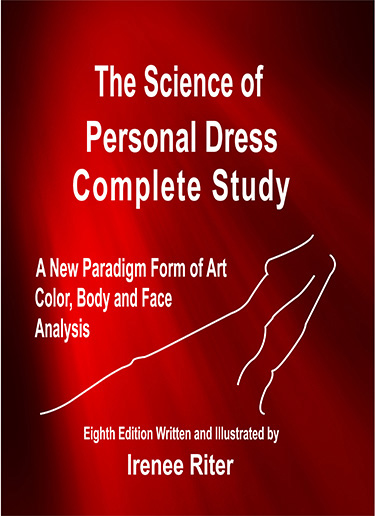
The Complete Study is presented on the original site as the comprehensive manual for professional clothing, body, face-analysis, education, and certification study.
The comprehensive manual covering color, body, face, clothing-line analysis, designer tools, men's and women's study, and professional education.
View contents →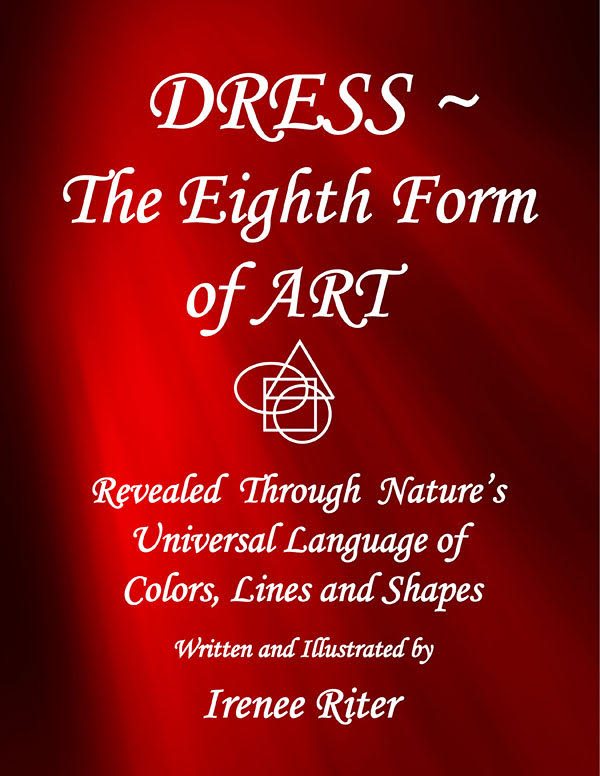
A focused presentation of dress as an art form connected to nature's colors, lines, shapes, and visual harmony.
See the Method →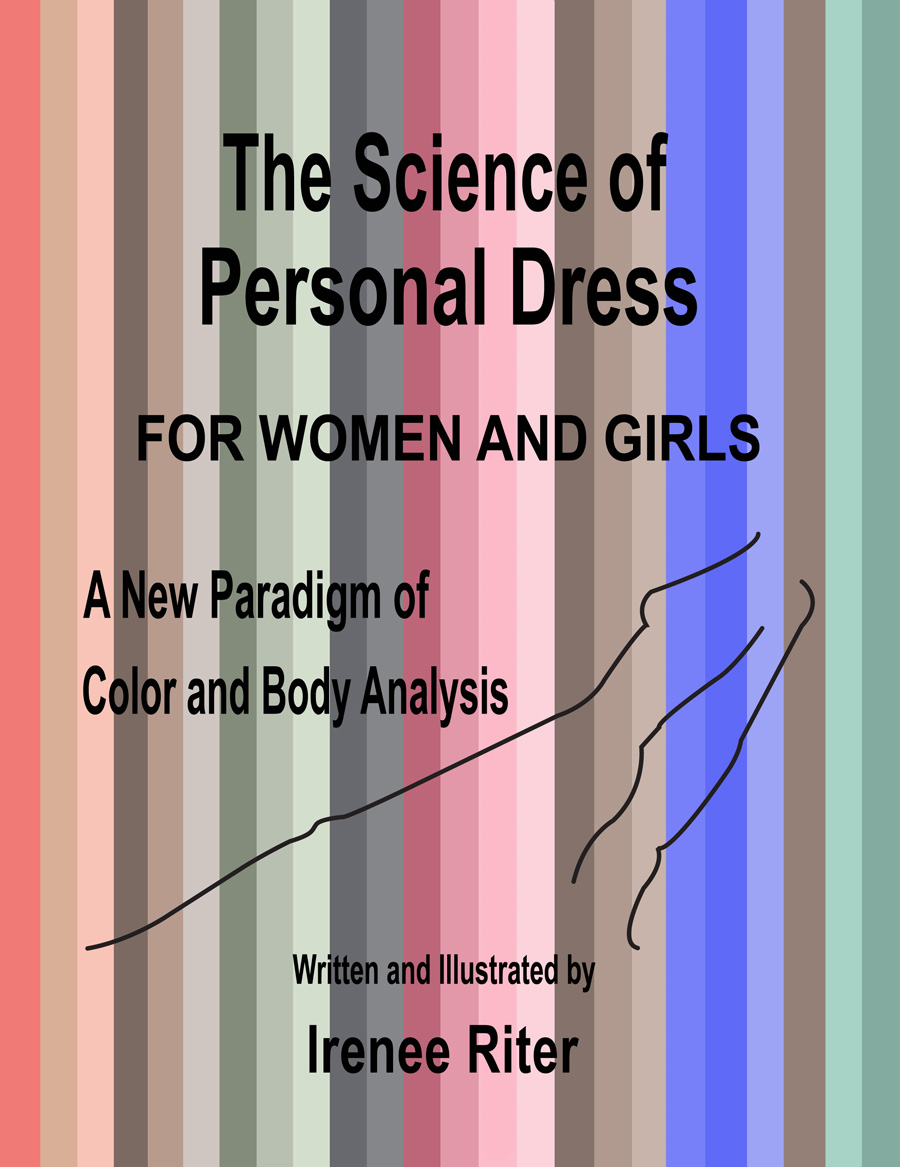
A more concise pathway emphasizing practical color and body analysis for personal application.
Start with the Questionnaire →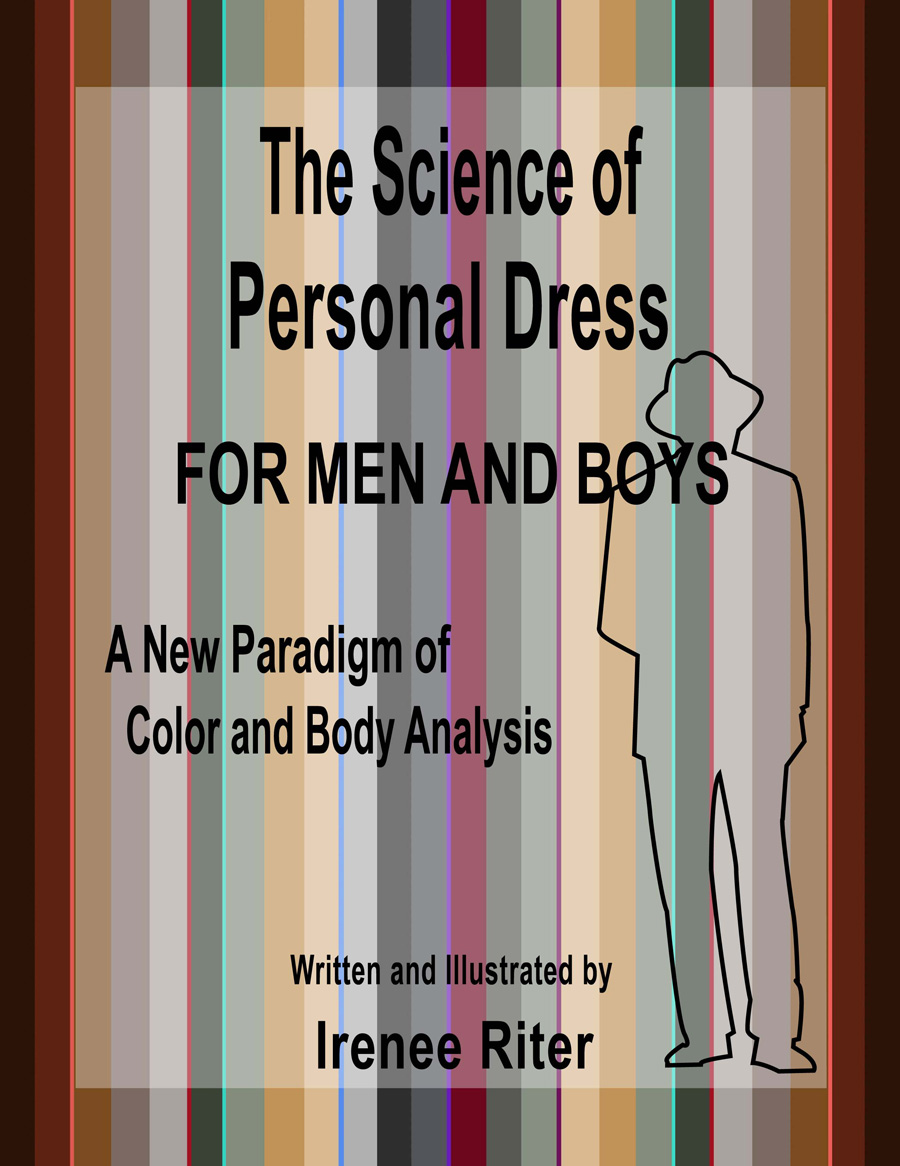
Practical wardrobe combinations and line principles adapted specifically for men and boys.
Start with the Questionnaire →
Explores how facial structure connects with scale, line, dress, and personality interpretation.
Start with the Questionnaire →
A condensed entry point to holistic color and body analysis with practical dressing applications.
Start with the Questionnaire →
Personal presentation, social skills, manners, grooming, and dress for men and boys.
Start with the Questionnaire →
A companion handbook on manners, charm, etiquette, and cultivated personal presentation.
Start with the Questionnaire →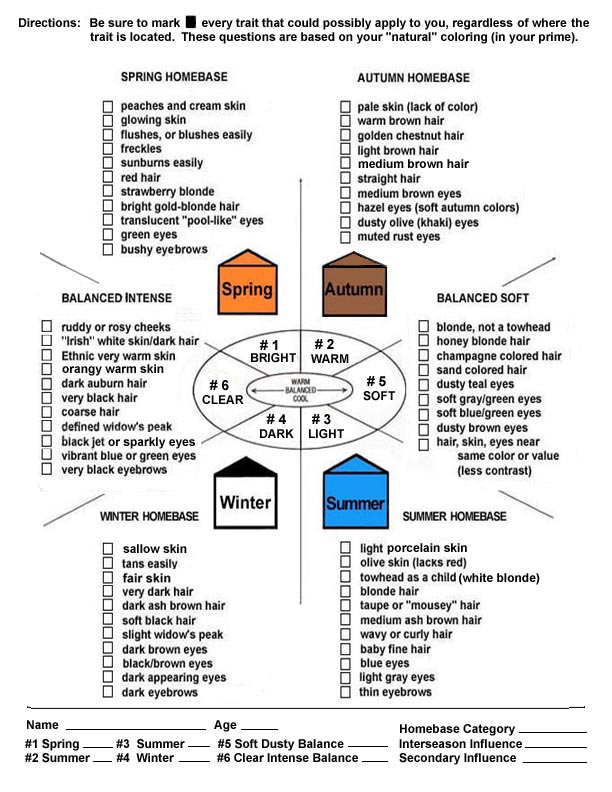
The Personal Color Tester gives you the opportunity to see and compare your best colors for yourself. The complete study materials extend the system through body structure, Keysize, Inter-season color and line, hair and eye color, and professional training.
Readers, students, and image professionals describe the system as practical, clarifying, and deeply grounded in the relationship between color, line, body structure, and personal expression.
"The Science of Personal Dress is classically sound and gives the real answers."
Reader testimonial • California"I am fascinated by the wealth and the depth of your knowledge."
Reader testimonial • Oslo, Norway"It's a kind of a Bible for me."
Reader testimonial • Rouen, France
Irenee Riter developed and taught this study of personal color, line, body structure, face structure, and dress through decades of research, teaching, and practice. Her work grew from foundation color and line study at the Academy of Art in San Francisco and connects principles of visual art with the colors, shapes, scale, and lines found in the human form. The central aim is not to follow fashion, but to understand why particular colors and lines harmonize with an individual.
Irenee's personal site / portfolio (add URL) →
Explore the Method